Your browser is outdated. To ensure the best experience, update to the latest version of your preferred browser. Update
What are Interactive Tools?
Interactive tools are digital activities, stories, guided exercises, and other resources that teach and support mental health interventions. Find interactive and beautifully designed tools for all ages, covering topics like anxiety, relationships, ADHD, anger, and more.
Interactive Tools Types

Games & Activities
We've created activities that explain mental health concepts while also being fun and engaging. Teach children about anxiety with Worry Bugs, help clients identify feelings with Where I Feel, or lead an adult group with Mental Health BINGO.

Guided Audio
Teach relaxation and coping skills with the help of professional audio tools. You'll find materials for all ages covering mindfulness, grounding exercises, and more. Best of all: Download and share these tools for your clients to practice at home.

Educational Storybooks
Follow along with Mouse, Rabbit, Bear, and others as they teach kids about topics such as anxiety, depression, ADHD, divorce, bullying, and more. Stories include supplemental worksheets to reinforce learning.
…and More!
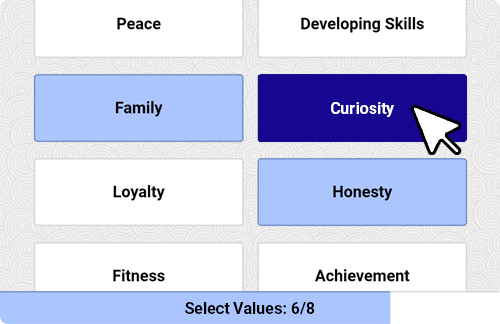
From the Values Assessment to the Mandala Builder, there's a lot more to discover. Use interactive tools to keep your sessions engaging, whether meeting virtually or in your office.
Free to Try

Addictions Bingo Alias non est recusandae.
Socratic questioning is a method of teaching by asking thoughtful questions. A teacher who uses this technique asks questions from a place of genuine curiosity, encouraging the student to think deeply about their responses. Socratic questioning is especially helpful when examining complex ideas and challenging assumptions. In psychotherapy, clinicians use Socratic questioning to help their clients examine the evidence and logic behind their beliefs. This examination encourages clients to identify and challenge thoughts that are irrational or harmful. Socratic questioning is a general technique that may be used in many forms of psychotherapy. In this guide we focus on its use in cognitive behavioral therapy (CBT). However, many of the skills are transferrable to other therapeutic approaches. Identify a Thought to Target During therapy, many different distressing or maladaptive thoughts may come to the surface. To use Socratic questioning effectively, it’s important to focus on one thought at a time, rather than trying to address several thoughts at once. To identify an important thought, look for changes in affect, or ask your client what thought is most important to them. Notice Changes in Affect Sudden changes in facial expression, body language, or tone of voice may signal an important thought. When you notice a change in affect, pause the conversation and dig deeper to learn what triggered the change. Therapist: I just noticed a sudden change in your demeanor. A moment ago, you had a big smile on your face. But then, when I asked about school, your face clouded over, and you looked really upset. What thought was going through your mind in that moment? Ask Directly Instead of guessing which thought is most important, or assuming you know... just ask! It may help to offer a list of thoughts your client has shared, and encourage them to choose one. Therapist: We’ve talked about how your depression leads to thoughts such as “I’m worthless,” and “I’ll never make it as a teacher.” What thought would you say is most distressing for you? Explore the Evidence for the Thought Before attempting to challenge a thought, it’s important to understand your client’s point of view. How strongly held is their thought? What experiences do they view as evidence? During exploration, you will focus on showing empathy and listening with an open mind. Exploration Questions What experiences is this thought based on? What are the facts that support your thought? What is the strongest evidence to support this thought? Is this thought based on something someone said to you? How long have you believed this? How strongly do you believe this thought is true? Tip: It might be tempting to begin challenging harmful beliefs right away—especially if the evidence seems shaky. However, the goal at this stage is only to understand. Focus on listening non-judgmentally, showing empathy, and validating feelings, rather than fixing problems. After exploring the evidence for a maladaptive thought, the next step is to challenge it. Challenge the Thought Using Socratic questions, you will encourage your client to view their thought objectively. This is achieved by examining the evidence for a belief, considering alternate explanations, and identifying unfounded assumptions. As a clinician, your goal continues to be understanding. However, you may begin asking questions that encourage your client to examine their evidence more critically or take new perspectives. Whenever your client presents evidence for their thought, use Socratic questioning to delve deeper. Are cognitive distortions influencing this evidence? Is this evidence based on facts that most people would agree with? In some cases, your client will present strong evidence, and you will better understand their perspective. In other cases, your client may find shortcomings in their evidence, and begin to take a new perspective themselves. Use the list below to guide your questioning. Effective Socratic Questioning... ...uses open-ended questions or questions that encourage elaboration. ...comes from a place of mutual curiosity and exploration. ...allows the client to see their situation from a different point of view. ...encourages the client to reassess unfounded assumptions that were used as evidence. ...raises new evidence that may contradict a thought. Example Prompts for Socratic Questioning Are there times when you see things in a more positive light? Could there be other interpretations of the evidence you presented? Can you think of new evidence that would lead to a different thought? Was there a period where you did not hold this belief? Are you basing your thought on feelings, rather than facts? If your best friend were in the same situation, what would you say to them? Are you seeing things in black-and-white? If you try to look at your thought in a more balanced way, how does it change? Are you making any assumptions about the thoughts and feelings of other people? Tip: Cognitive distortions are a good target for Socratic questioning. Use a list of cognitive distortions for reference. Cognitive Restructuring: Socratic Questions worksheet Remember that the thought you are exploring is likely to be deeply ingrained in how your client sees themselves or the world. It’s normal for Socratic questioning to be a gradual process. After successfully challenging a thought, the next step is to create a new, rational, and adaptive thought to take its place. Adopt a New Thought As old evidence is examined and challenged, a new thought will begin to form. The goal during this stage is to make sure the new thought is adaptive and rational. This is achieved by reviewing the valid evidence and synthesizing it into a few sentences. Part 1: Summarize the Evidence Adopting a new belief that is honest and accurate will lead to a thought that is durable. It will stand up to new evidence, rather than being undermined by future experiences. Before adopting a new thought, it is helpful to summarize the evidence discussed up to this point. During this process, you and the client should review all the evidence—not just evidence that’s positive. The goal is to develop an accurate and honest representation of the facts, rather than something that is all good or bad. Adopting a new belief that is honest and accurate will lead to a thought that is durable. It will stand up to new evidence, rather than being undermined by future experiences. Before moving on, the client should be fully on-board with the new belief, and able to summarize the information in their own words. Part 2: Synthesize the Evidence Once the evidence has been summarized, the next step is boiling it down to a single thought. The new thought should be rational, truthful, and no more than a few sentences long. Your client must be in full agreement with the new thought, and it should replace the old maladaptive thought. Maladaptive Thought New Thought “I’m a bad mom.” “Like any mother, I’ve made mistakes... but I love and support my kids as best I can.” “I’ll never make it as a teacher.” “I’m still new and have a lot to learn as a teacher. But I’ve done other difficult things, and I can do this too.” “People don’t like spending time with me because I’m awkward.” “I feel way more awkward than I actually am. I might not be the most popular, but I have several good friends.” Even after completing Socratic questioning, there’s still work to be done. Your client may find that the old maladaptive thought still sneaks in from time-to-time. Or, the new adaptive thought might require further reinforcement, such as through behavioral experiments or other strategies. Some tools that can be useful following Socratic questioning include: Behavioral Experiment worksheet Thought Log worksheet To learn more about Socratic questioning, check out this very useful resource: Socratic Questioning for Therapists and Counselors book

Mental Health Bingo Est est ipsam delectus ad.
Socratic questioning is a method of teaching by asking thoughtful questions. A teacher who uses this technique asks questions from a place of genuine curiosity, encouraging the student to think deeply about their responses. Socratic questioning is especially helpful when examining complex ideas and challenging assumptions. In psychotherapy, clinicians use Socratic questioning to help their clients examine the evidence and logic behind their beliefs. This examination encourages clients to identify and challenge thoughts that are irrational or harmful. Socratic questioning is a general technique that may be used in many forms of psychotherapy. In this guide we focus on its use in cognitive behavioral therapy (CBT). However, many of the skills are transferrable to other therapeutic approaches. Identify a Thought to Target During therapy, many different distressing or maladaptive thoughts may come to the surface. To use Socratic questioning effectively, it’s important to focus on one thought at a time, rather than trying to address several thoughts at once. To identify an important thought, look for changes in affect, or ask your client what thought is most important to them. Notice Changes in Affect Sudden changes in facial expression, body language, or tone of voice may signal an important thought. When you notice a change in affect, pause the conversation and dig deeper to learn what triggered the change. Therapist: I just noticed a sudden change in your demeanor. A moment ago, you had a big smile on your face. But then, when I asked about school, your face clouded over, and you looked really upset. What thought was going through your mind in that moment? Ask Directly Instead of guessing which thought is most important, or assuming you know... just ask! It may help to offer a list of thoughts your client has shared, and encourage them to choose one. Therapist: We’ve talked about how your depression leads to thoughts such as “I’m worthless,” and “I’ll never make it as a teacher.” What thought would you say is most distressing for you? Explore the Evidence for the Thought Before attempting to challenge a thought, it’s important to understand your client’s point of view. How strongly held is their thought? What experiences do they view as evidence? During exploration, you will focus on showing empathy and listening with an open mind. Exploration Questions What experiences is this thought based on? What are the facts that support your thought? What is the strongest evidence to support this thought? Is this thought based on something someone said to you? How long have you believed this? How strongly do you believe this thought is true? Tip: It might be tempting to begin challenging harmful beliefs right away—especially if the evidence seems shaky. However, the goal at this stage is only to understand. Focus on listening non-judgmentally, showing empathy, and validating feelings, rather than fixing problems. After exploring the evidence for a maladaptive thought, the next step is to challenge it. Challenge the Thought Using Socratic questions, you will encourage your client to view their thought objectively. This is achieved by examining the evidence for a belief, considering alternate explanations, and identifying unfounded assumptions. As a clinician, your goal continues to be understanding. However, you may begin asking questions that encourage your client to examine their evidence more critically or take new perspectives. Whenever your client presents evidence for their thought, use Socratic questioning to delve deeper. Are cognitive distortions influencing this evidence? Is this evidence based on facts that most people would agree with? In some cases, your client will present strong evidence, and you will better understand their perspective. In other cases, your client may find shortcomings in their evidence, and begin to take a new perspective themselves. Use the list below to guide your questioning. Effective Socratic Questioning... ...uses open-ended questions or questions that encourage elaboration. ...comes from a place of mutual curiosity and exploration. ...allows the client to see their situation from a different point of view. ...encourages the client to reassess unfounded assumptions that were used as evidence. ...raises new evidence that may contradict a thought. Example Prompts for Socratic Questioning Are there times when you see things in a more positive light? Could there be other interpretations of the evidence you presented? Can you think of new evidence that would lead to a different thought? Was there a period where you did not hold this belief? Are you basing your thought on feelings, rather than facts? If your best friend were in the same situation, what would you say to them? Are you seeing things in black-and-white? If you try to look at your thought in a more balanced way, how does it change? Are you making any assumptions about the thoughts and feelings of other people? Tip: Cognitive distortions are a good target for Socratic questioning. Use a list of cognitive distortions for reference. Cognitive Restructuring: Socratic Questions worksheet Remember that the thought you are exploring is likely to be deeply ingrained in how your client sees themselves or the world. It’s normal for Socratic questioning to be a gradual process. After successfully challenging a thought, the next step is to create a new, rational, and adaptive thought to take its place. Adopt a New Thought As old evidence is examined and challenged, a new thought will begin to form. The goal during this stage is to make sure the new thought is adaptive and rational. This is achieved by reviewing the valid evidence and synthesizing it into a few sentences. Part 1: Summarize the Evidence Adopting a new belief that is honest and accurate will lead to a thought that is durable. It will stand up to new evidence, rather than being undermined by future experiences. Before adopting a new thought, it is helpful to summarize the evidence discussed up to this point. During this process, you and the client should review all the evidence—not just evidence that’s positive. The goal is to develop an accurate and honest representation of the facts, rather than something that is all good or bad. Adopting a new belief that is honest and accurate will lead to a thought that is durable. It will stand up to new evidence, rather than being undermined by future experiences. Before moving on, the client should be fully on-board with the new belief, and able to summarize the information in their own words. Part 2: Synthesize the Evidence Once the evidence has been summarized, the next step is boiling it down to a single thought. The new thought should be rational, truthful, and no more than a few sentences long. Your client must be in full agreement with the new thought, and it should replace the old maladaptive thought. Maladaptive Thought New Thought “I’m a bad mom.” “Like any mother, I’ve made mistakes... but I love and support my kids as best I can.” “I’ll never make it as a teacher.” “I’m still new and have a lot to learn as a teacher. But I’ve done other difficult things, and I can do this too.” “People don’t like spending time with me because I’m awkward.” “I feel way more awkward than I actually am. I might not be the most popular, but I have several good friends.” Even after completing Socratic questioning, there’s still work to be done. Your client may find that the old maladaptive thought still sneaks in from time-to-time. Or, the new adaptive thought might require further reinforcement, such as through behavioral experiments or other strategies. Some tools that can be useful following Socratic questioning include: Behavioral Experiment worksheet Thought Log worksheet To learn more about Socratic questioning, check out this very useful resource: Socratic Questioning for Therapists and Counselors book

Act Mixed Relaxation Ut impedit quasi quo harum.
Socratic questioning is a method of teaching by asking thoughtful questions. A teacher who uses this technique asks questions from a place of genuine curiosity, encouraging the student to think deeply about their responses. Socratic questioning is especially helpful when examining complex ideas and challenging assumptions. In psychotherapy, clinicians use Socratic questioning to help their clients examine the evidence and logic behind their beliefs. This examination encourages clients to identify and challenge thoughts that are irrational or harmful. Socratic questioning is a general technique that may be used in many forms of psychotherapy. In this guide we focus on its use in cognitive behavioral therapy (CBT). However, many of the skills are transferrable to other therapeutic approaches. Identify a Thought to Target During therapy, many different distressing or maladaptive thoughts may come to the surface. To use Socratic questioning effectively, it’s important to focus on one thought at a time, rather than trying to address several thoughts at once. To identify an important thought, look for changes in affect, or ask your client what thought is most important to them. Notice Changes in Affect Sudden changes in facial expression, body language, or tone of voice may signal an important thought. When you notice a change in affect, pause the conversation and dig deeper to learn what triggered the change. Therapist: I just noticed a sudden change in your demeanor. A moment ago, you had a big smile on your face. But then, when I asked about school, your face clouded over, and you looked really upset. What thought was going through your mind in that moment? Ask Directly Instead of guessing which thought is most important, or assuming you know... just ask! It may help to offer a list of thoughts your client has shared, and encourage them to choose one. Therapist: We’ve talked about how your depression leads to thoughts such as “I’m worthless,” and “I’ll never make it as a teacher.” What thought would you say is most distressing for you? Explore the Evidence for the Thought Before attempting to challenge a thought, it’s important to understand your client’s point of view. How strongly held is their thought? What experiences do they view as evidence? During exploration, you will focus on showing empathy and listening with an open mind. Exploration Questions What experiences is this thought based on? What are the facts that support your thought? What is the strongest evidence to support this thought? Is this thought based on something someone said to you? How long have you believed this? How strongly do you believe this thought is true? Tip: It might be tempting to begin challenging harmful beliefs right away—especially if the evidence seems shaky. However, the goal at this stage is only to understand. Focus on listening non-judgmentally, showing empathy, and validating feelings, rather than fixing problems. After exploring the evidence for a maladaptive thought, the next step is to challenge it. Challenge the Thought Using Socratic questions, you will encourage your client to view their thought objectively. This is achieved by examining the evidence for a belief, considering alternate explanations, and identifying unfounded assumptions. As a clinician, your goal continues to be understanding. However, you may begin asking questions that encourage your client to examine their evidence more critically or take new perspectives. Whenever your client presents evidence for their thought, use Socratic questioning to delve deeper. Are cognitive distortions influencing this evidence? Is this evidence based on facts that most people would agree with? In some cases, your client will present strong evidence, and you will better understand their perspective. In other cases, your client may find shortcomings in their evidence, and begin to take a new perspective themselves. Use the list below to guide your questioning. Effective Socratic Questioning... ...uses open-ended questions or questions that encourage elaboration. ...comes from a place of mutual curiosity and exploration. ...allows the client to see their situation from a different point of view. ...encourages the client to reassess unfounded assumptions that were used as evidence. ...raises new evidence that may contradict a thought. Example Prompts for Socratic Questioning Are there times when you see things in a more positive light? Could there be other interpretations of the evidence you presented? Can you think of new evidence that would lead to a different thought? Was there a period where you did not hold this belief? Are you basing your thought on feelings, rather than facts? If your best friend were in the same situation, what would you say to them? Are you seeing things in black-and-white? If you try to look at your thought in a more balanced way, how does it change? Are you making any assumptions about the thoughts and feelings of other people? Tip: Cognitive distortions are a good target for Socratic questioning. Use a list of cognitive distortions for reference. Cognitive Restructuring: Socratic Questions worksheet Remember that the thought you are exploring is likely to be deeply ingrained in how your client sees themselves or the world. It’s normal for Socratic questioning to be a gradual process. After successfully challenging a thought, the next step is to create a new, rational, and adaptive thought to take its place. Adopt a New Thought As old evidence is examined and challenged, a new thought will begin to form. The goal during this stage is to make sure the new thought is adaptive and rational. This is achieved by reviewing the valid evidence and synthesizing it into a few sentences. Part 1: Summarize the Evidence Adopting a new belief that is honest and accurate will lead to a thought that is durable. It will stand up to new evidence, rather than being undermined by future experiences. Before adopting a new thought, it is helpful to summarize the evidence discussed up to this point. During this process, you and the client should review all the evidence—not just evidence that’s positive. The goal is to develop an accurate and honest representation of the facts, rather than something that is all good or bad. Adopting a new belief that is honest and accurate will lead to a thought that is durable. It will stand up to new evidence, rather than being undermined by future experiences. Before moving on, the client should be fully on-board with the new belief, and able to summarize the information in their own words. Part 2: Synthesize the Evidence Once the evidence has been summarized, the next step is boiling it down to a single thought. The new thought should be rational, truthful, and no more than a few sentences long. Your client must be in full agreement with the new thought, and it should replace the old maladaptive thought. Maladaptive Thought New Thought “I’m a bad mom.” “Like any mother, I’ve made mistakes... but I love and support my kids as best I can.” “I’ll never make it as a teacher.” “I’m still new and have a lot to learn as a teacher. But I’ve done other difficult things, and I can do this too.” “People don’t like spending time with me because I’m awkward.” “I feel way more awkward than I actually am. I might not be the most popular, but I have several good friends.” Even after completing Socratic questioning, there’s still work to be done. Your client may find that the old maladaptive thought still sneaks in from time-to-time. Or, the new adaptive thought might require further reinforcement, such as through behavioral experiments or other strategies. Some tools that can be useful following Socratic questioning include: Behavioral Experiment worksheet Thought Log worksheet To learn more about Socratic questioning, check out this very useful resource: Socratic Questioning for Therapists and Counselors book
Focus Fish



Focus Fish is an engaging, educational activity about ADHD. Children select and name a fish character who will guide them through 5 interactive activities, such as card matching and sentence completion.
Through simple and encouraging language, kids will learn what ADHD is, identify their own challenges related to ADHD, and practice coping skills. After completing each of the activities, you can print the results in a colorful packet to encourage children and caregivers to review what they’ve learned.
Managing the symptoms of ADHD can have a dramatic positive effect on a child’s school performance, social relationships, and self-esteem.
View Plans


The Penguin with Two Homes
Follow along as penguin learns about divorce, and how to cope with a changing family. The Penguin with Two Homes is a 16 page digital story, full of bright and colorful illustrations to keep children engaged as they learn about divorce.
View PlansVisualizations



Wander through a towering red-rock canyon. Soak in a hot spring on a windswept island. Stroll through a charming city in search of a hidden courtyard.
Our guided imagery audio blends professional narration with stunning soundscapes to immerse you in these exotic locations. Just sit back, press play, and enjoy being whisked away!
Share these resources with your clients to help them escape the stressors of daily life, create a pleasant nighttime routine, or connect with a sense of wonder.
View Plans

tools
you’ll also get...
Customizable
Worksheets
Fillable versions of Therapist Aid worksheets allow you and your clients to complete and share responses digitally, without the need to print. Personalize worksheets by integrating your own branding or contact information. Add notes or examples tailored to your clients' age and situation.


Telehealth-Friendly
Telehealth sessions are now an integral part of therapy. On most platforms, you can easily share and use our tools with clients, from our worksheets, articles, and guides to our videos, audio tracks, and educational stories. Incorporate our resources into your online sessions to add structure, focus, and variety.
Ad-Free Browsing
No one likes a page full of ads. As a professional member, you'll no longer see ads on the Therapist Aid website. This creates a crisper, more streamlined browsing experience. Pages load faster and it's easier to find what you need when you need it.

Browse Interactives by Category
Beautifully illustrated stories teaching mental health topics.
Browse Educational StoriesDigital activities for all ages on many mental health topics.
Browse Games & Activities